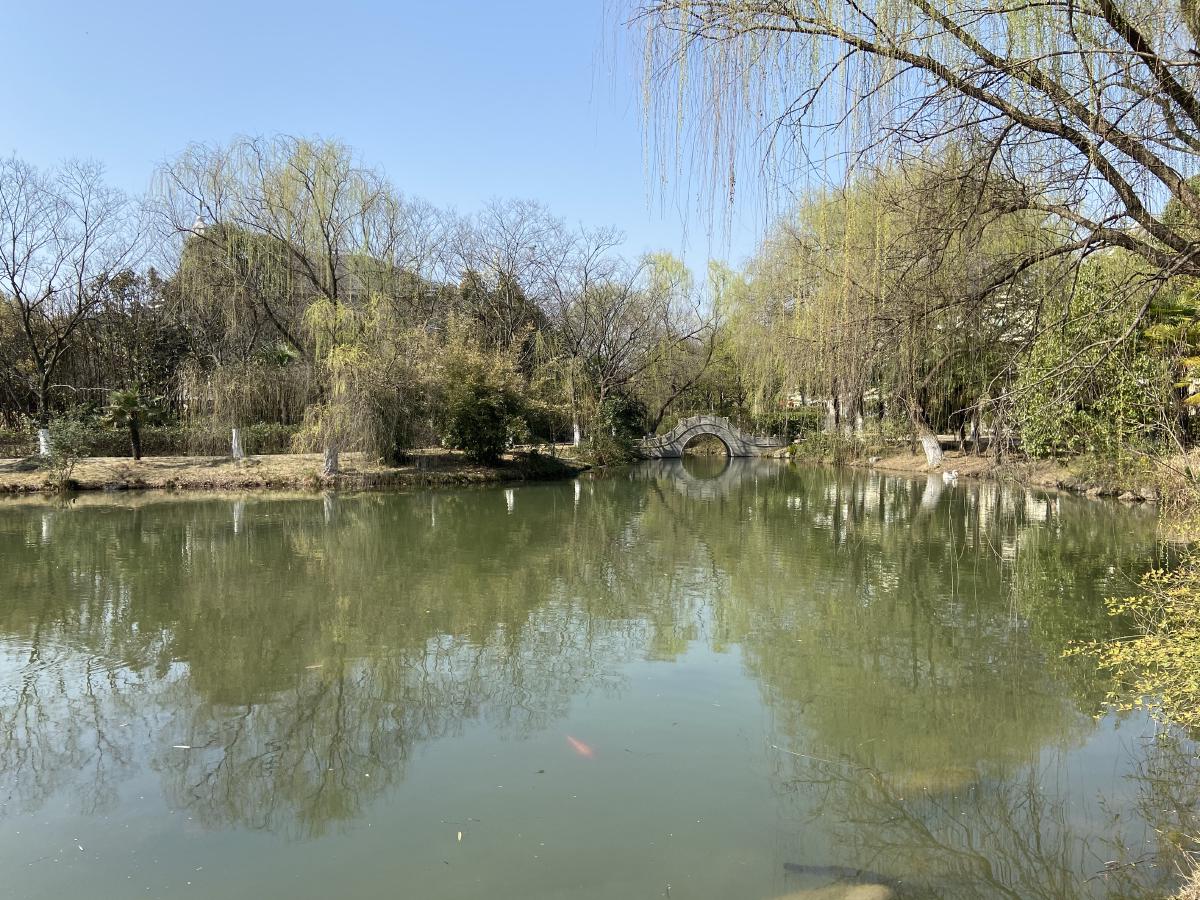
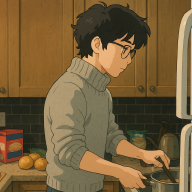
Here I am, on a Vancouver morning, sitting by the glass window of a corner café in downtown.
The music in my earphones has reached Scarborough Fair — my favorite BGM from playing Civilization VI. Outside, pedestrians come and go. I’ve been watching them for a long time. This is my new habit in Vancouver. Every morning, I find a café near the hotel, order a coffee and a breakfast, sit here for a while, and then start work.
Last week, I flew from Toronto to Vancouver. Some things happened, and I felt I needed to change locations to breathe. I am a very typical science student: in high school, I chose physics and chemistry; in university, I studied mathematics; for grad school, engineering; and now, I write code for work. All along, I have been accustomed to explaining the world through modeling. This mindset even extends to how I treat myself. In the past, I was quite introverted, liked thinking alone, and liked reflecting. I often looked back, examining whether my methodology was good enough, what weaknesses my personality had, and then tried to correct them.
But yesterday, while talking to a colleague about career planning, he asked me: “If we were replaced by AI, what would you enjoy doing?” I thought for a long time, and suddenly realized that despite all this self-scrutiny, I had only seen the flaws in my methodology and the weaknesses in my personality. Yet I failed to understand my own feelings; I had never truly cared about my own emotions.
Is it the darkness beneath the lamp?
Life in Toronto was like a precise closed loop. Sleep in, wake up, meet at home, get off work, play games. My identities were Engineer, Student, Research Assistant in the lab. These identities required output; they required solving problems. So when low moods came, my first reaction was to treat them as a system bug, trying to fix them with logic, to drive them away as soon as possible.
But often, the more I fixed, the more exhausted I became.
Vancouver is not strange to me. I’ve been here alone, with one other person, and even with a group of four. Here, my identities are softer: Tourist, Friend, Family, and once, a Lover. These identities don’t require me to solve problems; they only require me to experience the present.
Sitting in the café, I realized that trying to drive away low moods before was probably as futile as “drawing a sword to cut water—the water flows even more.” The sword is my logic; the water is my life and emotions. Water is meant to flow; I cannot use a sword to command it to stop.
This realization isn’t just about emotions. Looking back, I seem to have always been tired from solving every problem in sight, feeling that every question needs an answer, every dilemma needs a way out. But now I feel that leaving some problems aside is not unacceptable. They aren’t necessarily bugs that need fixing; some are just the original texture of life. Low moods are actually a state of touching the real world. They can exist without being fixed. Similarly, those unresolved problems can also exist without being solved immediately.
Regarding those questions from my colleague yesterday—we talked a lot, and he asked me many things, like what I like to do. I told him I had noted them down, appreciated his inspiration, and would think about them in the near future.
But I don’t know exactly when.
For now, I just want to clear my logic and touch my emotions. The song in the earphones is still spinning; the pedestrians outside are still walking.